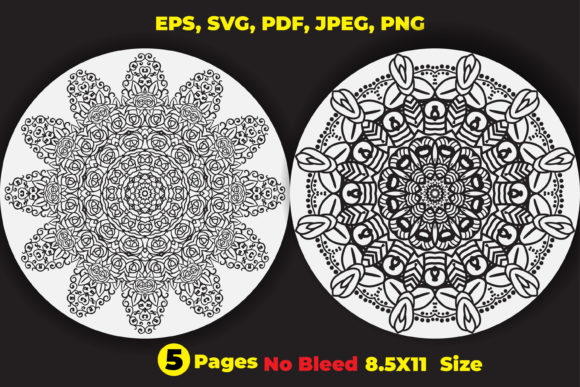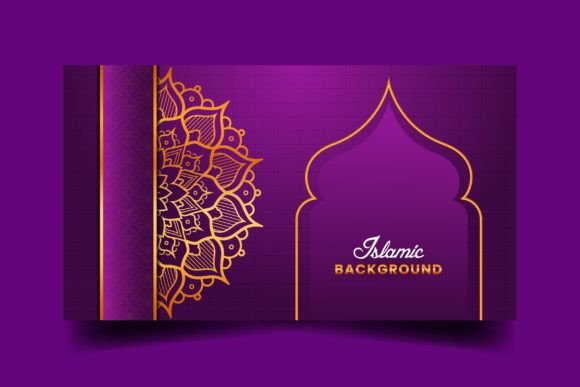
Decorative Islamic Mandala Background Graphics
As a brand designer who’s developed visual identities for over 40 local businesses—from halal bakeries in Detroit to artisanal candle studios in Austin—I recently evaluated the Decorative Islamic Mandala Background for a real-world project: rebranding a women-led, handmade soap business rooted in wellness, heritage, and mindful craftsmanship. What stood out immediately wasn’t just its intricate geometry—it was how thoughtfully it balanced reverence and versatility.
A First Impression That Speaks Before Words
The Decorative Islamic Mandala Background delivers an immediate sense of quiet elegance and intentional detail. Its symmetrical, interlaced patterns evoke tradition without feeling archival—more like a living design language. It reads as handmade yet precise, spiritual yet inclusive, and ornamental without overwhelming. For small business branding, that’s rare. It leans into warmth, authenticity, and quiet confidence—not loud novelty or sterile minimalism. I’d confidently pair it with organic skincare lines, boutique tea brands, Ramadan gift boxes, or even modern mosque community centers seeking refined promotional materials.
Where This Graphic Design Asset Earns Its Place
In practice, the Decorative Islamic Mandala Background shines where small businesses need both beauty and function:
- Product labels & packaging accents: Used as a subtle border on kraft soap tags or as a soft watermark behind ingredient lists—adding texture without sacrificing legibility.
- Thank-you cards & hang tags: Printed on thick cotton stock, it elevates unboxing moments for handmade sellers, reinforcing care and cultural resonance.
- Social media graphics: Cropped and layered beneath product photos for Instagram carousels or seasonal campaign banners—especially effective during Eid, Mawlid, or wellness-themed launches.
- Printable inserts & menu graphics: For halal cafés or community pop-ups, it adds visual rhythm to takeaway menus or event flyers without competing with core information.
- Brand identity extensions: When simplified into a monogram or icon, its central motif becomes a scalable element across business cards, website headers, and reusable tote bags.
Real Business Impact—Beyond Aesthetics
This isn’t just decoration. When applied intentionally, the Decorative Islamic Mandala Background strengthens several critical touchpoints:
- Better shelf appeal: On crowded farmers’ market tables or boutique shelves, its cohesive rhythm helps products stand out—not through brightness, but through calm authority.
- Clearer visual hierarchy: Its structured layout naturally guides the eye—ideal for pairing with serif or clean sans-serif typography on product mockups.
- Stronger emotional connection: Customers report feeling “seen” and “honored” when design reflects cultural nuance respectfully—not as trend, but as continuity.
- More consistent brand identity: Because it’s fully editable (RGB color shifts, vector scalability), it adapts seamlessly across digital and print—no mismatched tones between Instagram ads and physical stickers.
- Improved customer trust: High-resolution 300 DPI output and clean SVG/PNG transparency signal professionalism—especially vital for food labels or skincare packaging where credibility is non-negotiable.
Smart Usage Zones—and Where to Pause
It excels in decorative roles: hero banners, background layers for social posts, foil-stamped accents on gift boxes, or watermarked textures behind minimalist product photography. But it demands thoughtful placement.
Use carefully—or avoid—in these contexts:
- Legal disclaimers or dense ingredient panels (its detail can reduce readability at small sizes).
- Very compact labels (under 2" x 2") unless simplified to a single radial motif.
- Luxury minimalist brands relying on stark negative space—here, it may dilute their signature restraint.
- Low-contrast backgrounds (e.g., light gray on off-white) where fine linework risks disappearing.
- Formal corporate branding (law firms, financial advisors) where cultural specificity may unintentionally narrow perceived audience scope.
Practical Brand Designer Notes You Can’t Skip
Before committing this graphic design asset to client work or your own small business branding, test rigorously:
- Print it on real packaging mockups—not just screen previews—to assess how ink spread affects line clarity.
- Check black-and-white usage: Does the pattern retain structure when converted? Crucial for cost-effective label printing.
- Preview at actual label size: Zoom to 100% on a 1.5" x 1.5" sticker mockup—does spacing hold?
- Test with your brand palette: Swap colors using the editable RGB layers—does gold feel regal or gaudy? Does sage green read earthy or muddy?
- Compare side-by-side with top 3 competitors’ packaging: Does it differentiate—or blend in?
- Inspect SVG editability: Are paths clean and grouped logically? Can you isolate one petal or repeat unit without breaking the whole composition?
- Layer it with fonts: Try it behind script (for greeting cards), display (for posters), and tight sans-serif (for ingredient lists)—observe contrast and breathing room.
- Confirm commercial licensing: Ensure redistribution rights cover physical product sales, not just digital use—this is essential for handmade businesses selling packaged goods.
Final Thought: A Tool With Intention
The Decorative Islamic Mandala Background isn’t a shortcut—it’s a considered resource. When used by local business owners, packaging designers, or creative entrepreneurs who understand context, it deepens storytelling, honors heritage, and delivers polished marketing visuals without cliché. It supports small business branding not by shouting louder, but by holding space more meaningfully. Whether you’re designing for a home-based spice label, a seasonal gift collection, or a neighborhood florist’s Eid offering—the right background doesn’t just fill space. It affirms identity. And this one does it well.