Easter Decorative Beautiful
First Impression: A Delicate, Festive Whisper — Not a Shout
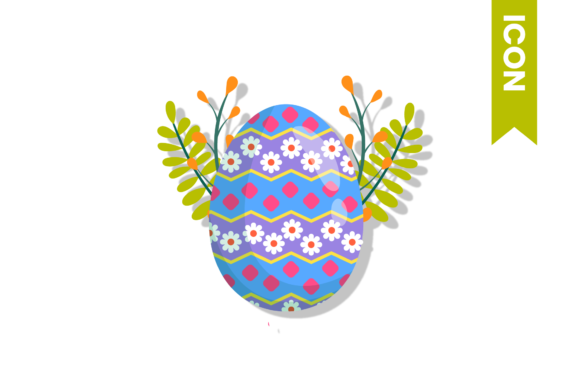
Opening Easter Decorative Beautiful for the first time, I didn’t see “busy” or “cute overload.” I saw balance: soft curves in the egg silhouette, gentle spacing between floral sprigs, and a subtle asymmetry that feels hand-placed—not algorithmically centered. It’s clearly designed as an icon, not a scene—so it breathes on fabric instead of crowding it. As a designer who’s stitched hundreds of holiday motifs, I immediately pictured this on a linen tea towel folded neatly beside a spring brunch table, or as a single embroidered motif on the chest of a newborn’s organic cotton onesie. It doesn’t scream “Easter!”—it invites quiet recognition. That’s rare. And valuable.
Where It Shines: Real Projects, Real Customers
Last week, I used Easter Decorative Beautiful to embroider a set of matching aprons for a local bakery’s spring pop-up. We stitched it on midweight cotton twill using a 4-inch hoop—no resizing needed—and the result held up beautifully under daily wear and repeated washing. The design’s clean lines translated directly into crisp satin stitch borders and even fill stitch areas without puckering. Customers kept asking, “Is that hand-drawn?” (It’s not—but it *feels* intentional, not mass-generated.) That kind of perception lifts perceived value, especially for handmade product sellers and Etsy sellers pricing premium goods.
It also worked surprisingly well on a curved surface: a structured cotton cap. Because the motif is compact and avoids tight interior corners or micro-details, it stabilized cleanly with light tear-away + cutaway combo stabilizer. No thread nesting, no distortion—even at the crown seam. For small shop owners developing boutique branding, that reliability matters. You’re not troubleshooting; you’re delivering.
Where to Pause—and Test First
Don’t assume Easter Decorative Beautiful will behave the same on every substrate. On thin rayon challis? It’ll need extra backing and possibly reduced stitch density—check your machine’s fill stitch settings before committing. On dark fabric, those fine interior flourishes (like the tiny stem lines inside the egg) may vanish unless you use high-contrast thread—test in black and white mockups first. And if you’re planning a dense applique design layered over this, reconsider: the original file is a graphic, not an applique template, so built-in placement guides or tack-down sequences aren’t included.
I also wouldn’t push it below a 3-inch hoop without verifying detail retention. Those delicate petal outlines and the fine script-style “Easter” lettering (yes—it’s part of the icon, not separate text) shrink fast. On baby embroidery or pillow covers where clarity is non-negotiable, always stitch a sample on scrap fabric matching your final base—same thread, same stabilizer, same tension.
Practical Designer Notes You’ll Actually Use
- Test before you commit: Run a full-stitch sample on fabric identical to your project—especially for custom apparel or sweatshirt embroidery where stretch and weight change everything.
- Thread colors make or break it: This design relies on tonal harmony. Try soft sage + cream, dusty rose + oat, or navy + ivory—not neon pairings. Muted palettes let the shape speak.
- Hoop size & stitch density matter: At 1920px × 1280px canvas size, scaling down too far risks losing definition. Confirm your target hoop fits comfortably within the design’s natural proportions.
- Stabilizer isn’t optional—it’s part of the design: Lightweight knit? Use cutaway. Linen? Medium-weight tear-away + topping. Skip this, and even Easter Decorative Beautiful can look fuzzy.
- Licensing check is essential: Since this is delivered as AI and EPS files (vector graphics), confirm whether commercial embroidery rights are included—especially if you’re selling finished products or digital embroidery files.
- Mock it right: Drop Easter Decorative Beautiful into printable mockups on both light and dark backgrounds. Does the balance hold? Does the egg shape read clearly at 2x and 0.75x scale?
Beyond the Stitch: How It Shapes Perception
This isn’t just about whether the design sews out cleanly—it’s about how it positions your brand. When a customer receives a tote bag with Easter Decorative Beautiful stitched precisely on the front, they don’t think “generic holiday clipart.” They sense care. Intention. Seasonal thoughtfulness. That builds trust—critical for craft business owners and personalized gift makers competing in a crowded market.
For digital product sellers, its vector format (AI/EPS) means easy adaptation: convert to PNG for web previews, scale for social banners, or rework elements into coordinating patterns. But remember—it’s a graphic first, not a machine embroidery design. If you plan to digitize it yourself for embroidery machines, inspect anchor points and closed paths carefully. Ragged vectors become jagged stitches.
A Final Thought for Makers Who Sell With Integrity
Easter Decorative Beautiful won’t carry your entire spring collection—but it might be the quiet, confident accent that ties everything together. Whether you’re stitching nursery decor, curating a holiday gift box, or building a cohesive line of small shop products, this icon earns its place by doing one thing very well: looking like it belongs. Not forced. Not trendy-for-trend’s-sake. Just beautifully, quietly, Easter.
If you’re evaluating it for client work or your own Etsy listings, ask yourself: does it reflect the tone your customers expect? Does it enhance—not distract from—the handmade product beneath it? If yes, it’s ready. Just stitch it with care, stabilize with confidence, and let the simplicity speak.