Mandala Graphics Pattern Collection: Designer Review
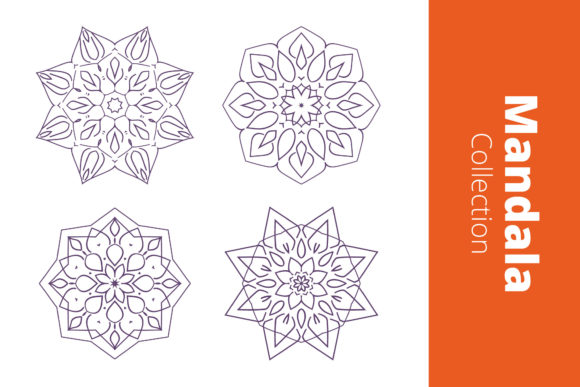
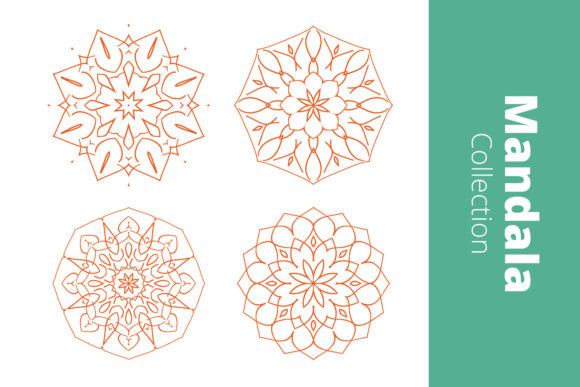
Opening the Mandala Decorative Collection feels like discovering a quiet creative shortcut. The files arrive clean and ready to use, with a visual tone that immediately suggests thoughtful craftsmanship rather than mass-produced ornamentation. The mandala patterns carry a balance between detail and restraint, which matters when you are building a cohesive brand direction for a client who needs visual richness without overwhelming their message.
My first instinct was to imagine this on a product label for a small batch candle maker or a handcrafted soap brand. The intricate linework sits comfortably in a space that feels both traditional and contemporary, offering a decorative quality that reads as intentional rather than generic. The 1920 by 1280 pixel canvas gives enough room to pull generous sections without losing resolution, which immediately makes me think about packaging design, brand identity, and large-format applications.
What the visual mood actually communicates
The collection leans into a meditative, symmetrical aesthetic. The mandala strokes feel organic rather than rigidly geometric, which softens the overall impression. This is not the cold, precise mandala style you sometimes find in mass-produced digital bundles. There is a hand-drawn sensibility that translates well into projects where warmth and approachability matter. For a client launching a wellness product line, yoga studio branding, or a handmade jewelry collection, this visual mood supports the emotional storytelling without needing excessive explanation.
The Patterns work particularly well because they manage to be ornate without becoming chaotic. Each mandala holds its center, radiates outward, and leaves enough breathing room for typography or product imagery to coexist. That versatility is rare in decorative graphic design assets, where many options feel either too sparse or impossibly busy.
Where this design asset genuinely shines
After testing the files across several mockup scenarios, certain applications clearly outperform others. The mandala elements thrive when given space to breathe. Large canvas areas let the full detail register, so I would confidently place these on product packaging, tote bag designs, wallpaper panels, and hero sections of a website. The vector formats give you the flexibility to scale without degradation, which is essential for print-on-demand products where the same design might appear on a small sticker and a large wall tapestry.
For social media graphics, the collection works beautifully as a background or accent layer. I tested a section of one mandala as a subtle overlay on Instagram posts for a fictional apothecary brand, and the result elevated the photography without competing for attention. The same element worked equally well as a bold centerpiece on a Pinterest pin, where the symmetrical design naturally draws the eye in a scrolling feed.
Brand identity projects benefit from the mandala motifs as secondary brand marks. A simplified version of one pattern could function as a logo emblem, a watermark, or a decorative element on business cards and hang tags. I have used similar design assets to create visual texture on packaging inserts, and the Mandala Decorative Collection would handle that task comfortably. The AI file format means you can isolate individual elements, adjust stroke weights, and recolor to match brand palettes without compromising the original quality.
The Cricut and craft application reality
For Cricut users and crafters building physical products, the EPS format opens up clean cutting paths. The mandala designs transfer well to vinyl cutting, heat transfer projects, and stencil creation. I tested one of the patterns on a mockup for a custom tote bag, and the registration held up nicely at multiple sizes. The detail level is high enough to create an impressive finished product, but the lines are not so thin that weeding becomes a nightmare. That practical balance matters when you are producing physical goods for a handmade business or Etsy shop.
Printables also benefit from the canvas dimensions. The 1920 by 1280 pixel ratio feels natural for wall art prints, journal covers, and planner inserts. The mandala designs carry enough visual weight to stand alone as a printable wall art piece, which makes them useful for digital sellers creating instant download products. Just remember to test print quality on your target paper stock before listing anything for sale, since the fine line detail can behave differently on coated versus uncoated papers.
When to exercise design restraint
Smart designers know when not to use an asset, and the Mandala Decorative Collection has clear limitations. The intricate detailing starts to lose impact at very small sizes. If you are designing a tiny logo bug or a favicon, these mandala patterns will collapse into visual noise. The same caution applies to crowded layouts where multiple competing elements would dilute the decorative quality. I would avoid placing these graphics on already busy photograph backgrounds or low-contrast color schemes where the linework disappears.
Minimalist branding projects also present a mismatch. If your client insists on ultra-clean Swiss design principles with generous white space and strict typographic hierarchy, introducing ornate mandala elements will feel like a design contradiction. Corporate materials, law firm branding, and professional financial services should probably skip this collection entirely. The decorative nature works against the precise, information-dense visual language those industries require.
Readability and visual hierarchy demand attention when using mandala patterns. I recommend testing any layout with the mandala as a background element against your chosen typeface. Sans serif fonts generally hold up better against the intricate linework, while delicate serif fonts, thin scripts, and lightweight handwritten styles can get lost in the visual texture. A bold display font or a sturdy slab serif creates a more successful contrast against the detailed patterns.
Real client project thought process
Imagine I am preparing a brand concept for a boutique tea company launching their first seasonal collection. The creative direction calls for botanical elegance with a slightly bohemian undertone. The Mandala Decorative Collection becomes a supporting element rather than the main visual. I would pull one mandala pattern, recolor it in a muted terracotta and sage palette, and use it as a subtle background on the tea tin labels. The same pattern, scaled down and simplified, could appear on the hang tag string cards and the tissue paper used for wrapping.
For the social media campaign, the mandala would anchor the Instagram grid as a recurring visual thread, appearing in carousel backgrounds and story templates. The consistency reinforces brand recognition while keeping the feed feeling intentional. The key is moderation: the mandala works as a seasoning, not the main dish. Overusing it across every touchpoint would cheapen the effect and make the brand feel one-dimensional.
Technical checks every designer should run
Before placing the Mandala Decorative Collection into any client project, I run through a standard evaluation routine. First, test the design in pure black and white. The patterns should hold their visual integrity without color propping up the structure. If the linework feels weak or unbalanced in grayscale, reconsider how you are using it in communication materials that might print in black and white.
Next, check contrast on both light and dark backgrounds. Some mandala sections may need opacity adjustments when placed over photography or colored blocks. I also preview the asset at actual size for the intended application. What looks crisp on a 27-inch monitor at full screen may become muddy when scaled down to a 2-inch label. Mock it up early and often.
File format inspection is equally critical. The inclusion of AI, EPS, and SVG formats means vector editing is fully supported, which is a significant advantage for professional design work. You can open the AI file, ungroup elements, extract individual mandala motifs, and customize them for each project. This flexibility turns a decorative pattern into a versatile design system rather than a static piece of clipart. The PNG format provides a ready-to-use option for quick placements, but always check the transparency quality before dropping it into a Canva template or digital layout.
Font pairing tests reveal how the mandala interacts with different typographic styles. I tested a bold sans serif, a delicate script, and a classic serif against the patterns. The sans serif creates the cleanest contrast. The script font, while beautiful on its own, struggled for legibility when placed over the more detailed mandala sections. Handwritten fonts and display typefaces with varied stroke widths also need careful placement. When in doubt, give the type plenty of padding around the decorative element.
Commercial licensing and practical usage notes
Every designer navigating client work needs to confirm commercial licensing terms before integrating any design asset into a deliverable. The Mandala Decorative Collection provides editable vector files, which opens up significant customization potential for branding projects, packaging, and marketing visuals. However, do not assume the license covers all use cases. Check whether you can use the patterns in logo design, print-on-demand products, Etsy digital downloads, or commercial merchandise. Some licenses restrict certain applications, and clarifying this upfront prevents legal headaches later.
For small business owners and brand managers who handle their own design work, the collection offers a cost-effective way to access professional-grade decorative elements without commissioning custom illustration. The 1920 by 1280 pixel canvas size provides enough resolution for most digital and print applications, and the multiple file formats accommodate different software preferences, from Adobe Illustrator to free alternatives.
The Mandala Decorative Collection Thank you for visiting my product -WHAT YOU GET- 5x Digital Files in total 1920px X 1280px Canvas Size Receive this design in the following formats – 1 AI File – 1 EPS Fi description confirms the technical specifications, and from a production standpoint, the asset delivers what it promises. The vector formats are well-structured, the PNG exports are clean, and the overall quality supports professional design work rather than hindering it.
Why this Graphic design asset earns its place in a toolkit
After working through the mockups, testing the files, and imagining the collection across multiple client scenarios, the Mandala Decorative Collection proves itself as a practical, visually appealing resource. It does not try to do everything, and that focus works in its favor. The patterns feel authentic rather than algorithmic, and the hand-drawn sensibility gives projects a human touch that stock vector graphics often lack.
For designers building cohesive brand worlds, content creators elevating their visual presence, and small business owners seeking polished decorative elements, this collection bridges the gap between premium custom illustration and accessible creative design resources. The mandala motifs support a wide range of aesthetics, from bohemian and vintage to modern botanical and eclectic, which means the asset grows with your project needs rather than locking you into a single style.
Keep the mandala out of cramped spaces, pair it with confident typography, test it relentlessly on real mockups, and let it enhance rather than dominate your layouts. When used with that mindset, the Mandala Decorative Collection becomes more than a simple pattern pack. It becomes a reliable creative design asset that consistently delivers polished, professional results across digital products, printable designs, and commercial design work.